Things have been rather busy, with numerous recording sessions, videography gigs, and portrait/event shoots, and the blog has been somewhat on the back-burner. Today I want to catch up with some 4x5 images I shot in the last month or so.
First up are some images from Lake Lanier. I visited Meagan in Atlanta and we saw a wonderful exhibit of images from Ansel Adams and others in Cartersville. We always visit the lake with my parents when we visit. I shot a few images with my TravelWide camerea and 90mm f/6.8 Angulon:
This same weekend, but in Valdosta, was the annual Azalea Festival. This is probably the last Azalea Festival I'll be able to attend, so I shot a few photos, again with my TravelWide:
Now I know I said 4x5, but I'm going to put a few more photos here from my Rolleiflex and Bessa II of the Azalea Fest, just because. The Bessa II, as I discovered, had some holes in the bellows unfortunately, but they've been fixed since:
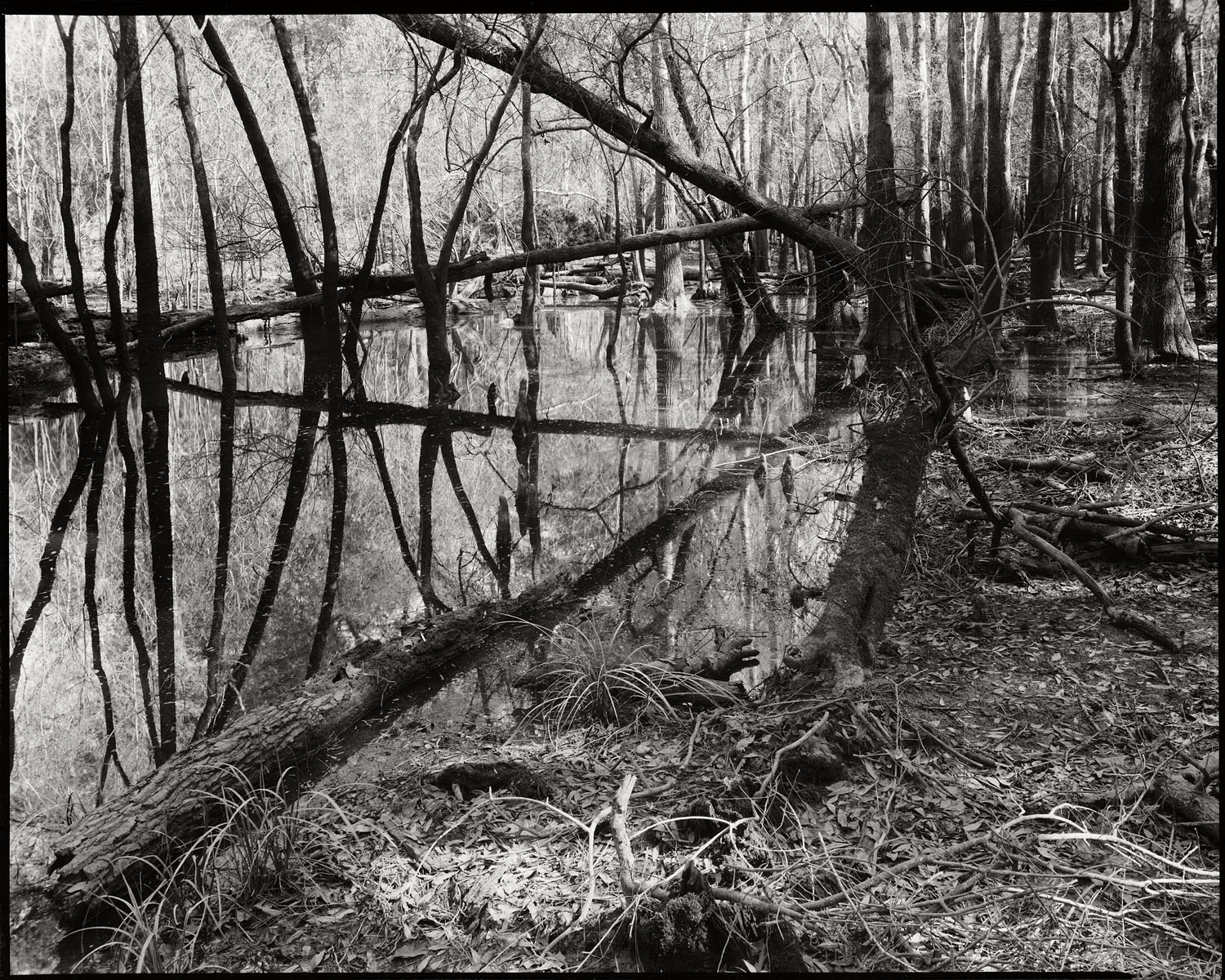
Now lastly a few landscapes. My friend Sally showed me some remote property she grows pine trees on and we explored a creek, and also found a funny old bar while driving:
And lastly! I found this wonderful field of sheep sorrel between Valdosta and Lakeland. I shot this on my Linhof with 72mm XL on Portra 160VC:
Driving home the light on this power substation was gorgeous so I shot one more image:
Well that's it for this wrap-up!
Showing posts with label Schneider 90mm. Show all posts
Saturday, April 2, 2016
Monday, March 28, 2016
Wehman "Ultralight" 8x10 Field Camera
These days it seems like there is no shortage of new companies building 8x10 and other size field cameras, often with space-age materials and impressive specs (and impressive price). I bought my first 8x10 camera, a Gundlach built in 1899, about 4 years ago. It was cheap and came with a cool lens, and I shot nothing but x-ray film with it for a long time. Later on I found a Wista 8x10, made by Tachihara, that was a bit more versatile and easier to use - but it was still really heavy and the thin paper bellows made me worried when hiking, as an errant tree branch could puncture it and ruin the camera.
I started thinking about upgrading my camera but the expensive new production models, even used, were just not the right fit for me. They were also for the most part still quite heavy. So when I saw a Wehman 8x10 "ultralight" advertised, I was intrigued. Looking up the specs, I discovered it was about 7 pounds, plus another pound could be shaved off by removing the top "clamshell," reducing the total extension (which I rarely would use). My mind was made up. I bought it.
In-hand, I was really amazed by the simple and elegant design and the great look of the camera. In the field, it was the perfect blend of simple usage and versatility. I have read in several places that Wehman only made two of these "ultralight" models but I can not verify that. Either way, I think this is the last 8x10 camera I'll ever need.
Last weekend I took it for its first large hike (about 3 miles). It was easy to carry and didn't weigh me down, and being so light I could also use a slightly less heavy tripod without worry. I hardly broke a sweat carrying the load, with 4 lenses in my bag and 12 sheets of film in 6 holders.
I hiked at Langdale Park, which was closed for "repair" earlier this year - but a local conservation group was allowed access to paddle down the river and take out at Langdale Park, so I tagged along.
Here are the photos from that day. First are a few on Delta 100, developed in FX-39, using either my 210mm f/9 Graphic Kowa, 300mm f/9 Nikkor-M, 25cm f/4.7 Fujinar, or 90mm f/5.6 Schneider XL (cropped slightly):
I also tried out two photos on Efke IR820 AURA film. I have a big box of this I've never used. Here are those photos (duplicates of the above, as I wasn't sure the Wehman bellows were IR light-tight...luckily it is!):

I started thinking about upgrading my camera but the expensive new production models, even used, were just not the right fit for me. They were also for the most part still quite heavy. So when I saw a Wehman 8x10 "ultralight" advertised, I was intrigued. Looking up the specs, I discovered it was about 7 pounds, plus another pound could be shaved off by removing the top "clamshell," reducing the total extension (which I rarely would use). My mind was made up. I bought it.
In-hand, I was really amazed by the simple and elegant design and the great look of the camera. In the field, it was the perfect blend of simple usage and versatility. I have read in several places that Wehman only made two of these "ultralight" models but I can not verify that. Either way, I think this is the last 8x10 camera I'll ever need.
Last weekend I took it for its first large hike (about 3 miles). It was easy to carry and didn't weigh me down, and being so light I could also use a slightly less heavy tripod without worry. I hardly broke a sweat carrying the load, with 4 lenses in my bag and 12 sheets of film in 6 holders.
I hiked at Langdale Park, which was closed for "repair" earlier this year - but a local conservation group was allowed access to paddle down the river and take out at Langdale Park, so I tagged along.
Here are the photos from that day. First are a few on Delta 100, developed in FX-39, using either my 210mm f/9 Graphic Kowa, 300mm f/9 Nikkor-M, 25cm f/4.7 Fujinar, or 90mm f/5.6 Schneider XL (cropped slightly):
I also tried out two photos on Efke IR820 AURA film. I have a big box of this I've never used. Here are those photos (duplicates of the above, as I wasn't sure the Wehman bellows were IR light-tight...luckily it is!):
Finally, I had one more sheet of Delta 100, so I took this photo of the WWALS group with that:

Now right before I took this last image, I had one bad thing happen - I slipped and fell pretty bad on some mud. The Wehman 8x10 took a dive and hit the ground hard too. Everything seemed okay, but then I discovered the nylon focus track had a few teeth go missing! I was dismayed, but I sent Mr. Wehman an email to see if he had parts. Amazingly, he responded later that day and offered to send a free replacement! What a great service and awesome guy! I just received the part today and installed it in just a few moments, and it's back to like-new condition (after I cleaned up the mud...).
I love this camera and can't wait to shoot it more!
Oh! One more thing. My friend Julie took this photo of me with the camera before I left:
Monday, February 8, 2016
Fast flooding of the Withlacoochee, Feb. 2016
I didn't think we had much rain last week, but nevertheless the Withlacoochee is way outside its banks and over 5 feet above flood stage. Yet again Valdosta is causing grief for Florida as the sewage treatment plant is discharging untreated water into the Withlacoochee.
I went to Langdale Park but the water from the river was all the way up near the entrance, barely a few hundred yards from the gate. Even with my wading boots I couldn't go far. I found a little side area I could explore and shot some with my new 8x10 camera (more about that at a later time).
I also decided to shoot a bit of x-ray film, as I hadn't shot it in quite a while. However, I had one extant sheet of Delta 100 from the last outing so I did a comparison shot. Very interesting result.
Here is my favorite shot of the day, on x-ray film:
This was shot with my 90mm XL on 8x10, but yes it had trouble covering. Actually, now that I think about it, I left the back barrel piece that can be removed on it so I might get a bit more coverage without that. Anyway, this crop is about 8.5 x 6.8 inches. I shot the Fuji HR-T film at an ISO of 100 and developed it in Rodinal 1:100 for about 7 minutes in cold solution (my darkroom has no heat and is very cold at the moment). Overall I really like the results.
The Delta 100 shot was an interesting comparison. Over all the contrast was higher, and I lost the shadows and highlights. This was partially my fault in developing. I was using a developer and time/dilution that was more appropriate for normal developing rather than rotary (I used a BTZS tube). So not the best test, but certainly interesting. Here that shot is:
One of the things about x-ray film that is different than normal film is the lack of a anti-halation layer. This causes slightly glowy highlights and slightly less resolution. Here is a small crop of x-ray film and the Delta 100 to show the differences:
There are some x-ray films that are more expensive that do have the AH layer. I use Fuji HR-T because it is really cheap. Generally it's not a big deal but still, if I'm especially worried about it I'll use normal film - though again, as you can see above, the contrast in this situation was better handled by the x-ray film, and more specifically, how I developed it. The most important thing here is to know your tools and materials, I suppose.
Here's a couple other photos from yesterday, all on the x-ray film - the first with my 210mm Graphic Kowa, the second with the 90mm XL again:
I went to Langdale Park but the water from the river was all the way up near the entrance, barely a few hundred yards from the gate. Even with my wading boots I couldn't go far. I found a little side area I could explore and shot some with my new 8x10 camera (more about that at a later time).
I also decided to shoot a bit of x-ray film, as I hadn't shot it in quite a while. However, I had one extant sheet of Delta 100 from the last outing so I did a comparison shot. Very interesting result.
Here is my favorite shot of the day, on x-ray film:
This was shot with my 90mm XL on 8x10, but yes it had trouble covering. Actually, now that I think about it, I left the back barrel piece that can be removed on it so I might get a bit more coverage without that. Anyway, this crop is about 8.5 x 6.8 inches. I shot the Fuji HR-T film at an ISO of 100 and developed it in Rodinal 1:100 for about 7 minutes in cold solution (my darkroom has no heat and is very cold at the moment). Overall I really like the results.
The Delta 100 shot was an interesting comparison. Over all the contrast was higher, and I lost the shadows and highlights. This was partially my fault in developing. I was using a developer and time/dilution that was more appropriate for normal developing rather than rotary (I used a BTZS tube). So not the best test, but certainly interesting. Here that shot is:
One of the things about x-ray film that is different than normal film is the lack of a anti-halation layer. This causes slightly glowy highlights and slightly less resolution. Here is a small crop of x-ray film and the Delta 100 to show the differences:
There are some x-ray films that are more expensive that do have the AH layer. I use Fuji HR-T because it is really cheap. Generally it's not a big deal but still, if I'm especially worried about it I'll use normal film - though again, as you can see above, the contrast in this situation was better handled by the x-ray film, and more specifically, how I developed it. The most important thing here is to know your tools and materials, I suppose.
Here's a couple other photos from yesterday, all on the x-ray film - the first with my 210mm Graphic Kowa, the second with the 90mm XL again:
Sunday, January 17, 2016
Wanderlust Travelwide 4x5 @ U.S.S. Alabama
Back in October I shot a bunch of film in Mississippi and Alabama, but never posted anything except a short preview. I got busy and had so much film that I just forgot! Anyway, I wanted to post a few things from that trip to catch up.
First, the day I was leaving for the trip, I actually received my Wanderlust Travelwide 4x5 camera. For those who don't know, this is a new production 4x5 camera designed to be a small, lightweight, fixed-lens camera. It was a Kickstarter project which I backed a couple of years ago that was finally released, after some design problems. It's a really nice camera and lends itself, as you'd expect, for travel.
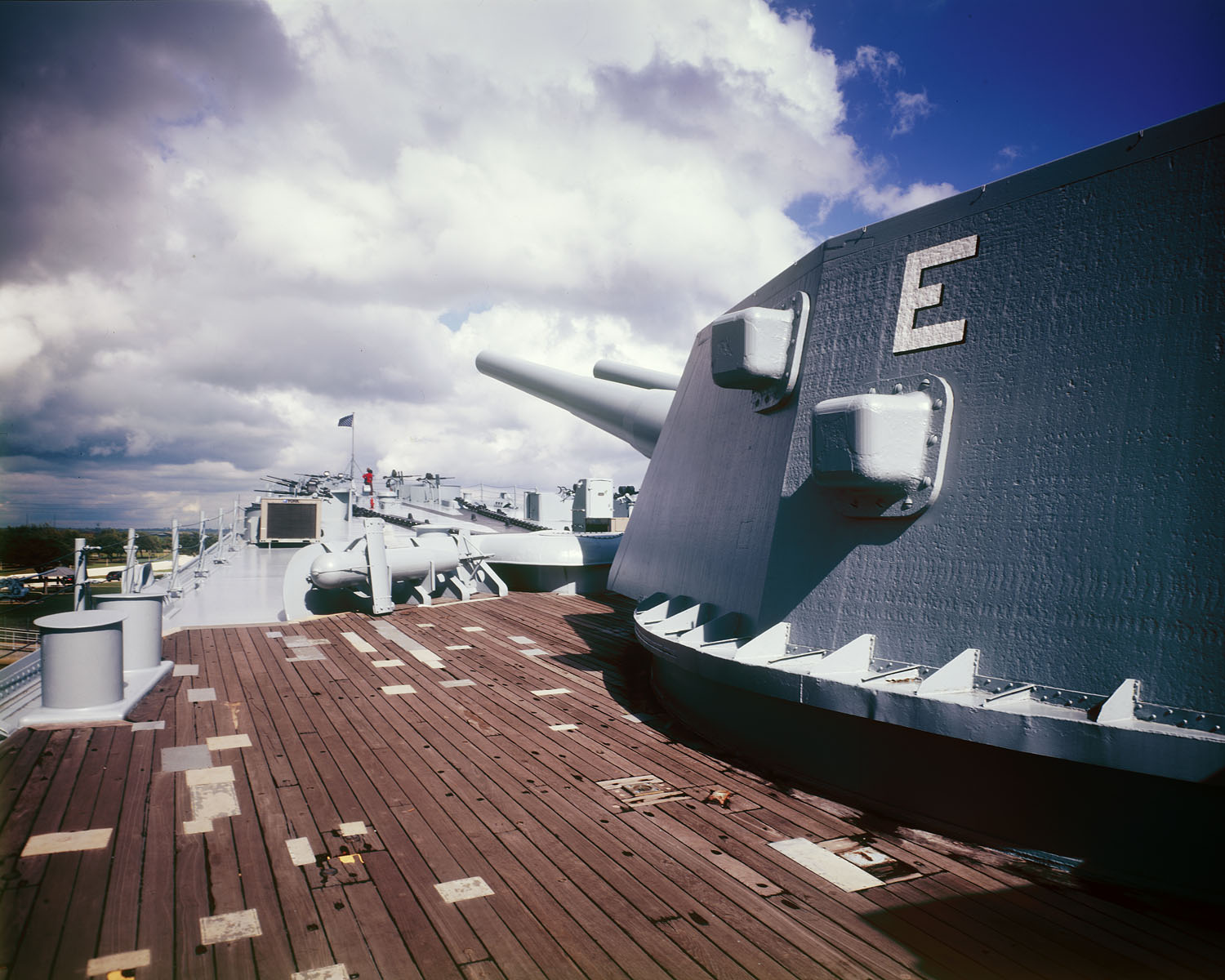
I took it with me on my trip and ended up shooting quite a bit at the U.S.S. Alabama with it. I did not want to bring a tripod onto the ship (if they would even let me) so HP5+ film on a sunny day allowed me to shoot handheld easily. Here's some images:
Overall this camera was really easy to carry and shoot. The auxiliary rangefinder and helical, once calibrated, worked perfectly. For a MSRP $150 camera, I couldn't be happier.
The only downside is my 90mm Angulon spontaneously developed separation, which ruined a couple of photos due to really bad flaring. I switched out to an old Super Angulon I have with a rough rear element to try, but I haven't shot anything with it yet. I'll probably take it out the next time I go canoeing.
While there I also had my Leica M6 in my pocket with Nikkor 50mm f/1.4 lens. I shot mostly inside the U.S.S. Drum, a submarine parked next to the Alabama. It is really dark in there and even with 400-speed film was a challenge. Here's a few of those shots, and also some inside and outside the Alabama and aircraft hanger:
That's it for today, more soon.
First, the day I was leaving for the trip, I actually received my Wanderlust Travelwide 4x5 camera. For those who don't know, this is a new production 4x5 camera designed to be a small, lightweight, fixed-lens camera. It was a Kickstarter project which I backed a couple of years ago that was finally released, after some design problems. It's a really nice camera and lends itself, as you'd expect, for travel.
I took it with me on my trip and ended up shooting quite a bit at the U.S.S. Alabama with it. I did not want to bring a tripod onto the ship (if they would even let me) so HP5+ film on a sunny day allowed me to shoot handheld easily. Here's some images:
And I took one photo on Velvia 50:
Overall this camera was really easy to carry and shoot. The auxiliary rangefinder and helical, once calibrated, worked perfectly. For a MSRP $150 camera, I couldn't be happier.
The only downside is my 90mm Angulon spontaneously developed separation, which ruined a couple of photos due to really bad flaring. I switched out to an old Super Angulon I have with a rough rear element to try, but I haven't shot anything with it yet. I'll probably take it out the next time I go canoeing.
While there I also had my Leica M6 in my pocket with Nikkor 50mm f/1.4 lens. I shot mostly inside the U.S.S. Drum, a submarine parked next to the Alabama. It is really dark in there and even with 400-speed film was a challenge. Here's a few of those shots, and also some inside and outside the Alabama and aircraft hanger:
That's it for today, more soon.
Subscribe to:
Posts (Atom)